
Shuja ud-Daula
| Shuja-ud-Daulah | |
|---|---|
|
Nawab Wazir of Oudh Nawab Wazir al-Mamalik Wazir ul-Hindustan (Prime Minister of India) Subedar of Kashmir, Agra & Oudh Khan Bhadur Asad Jang Arsh Manzil |
|
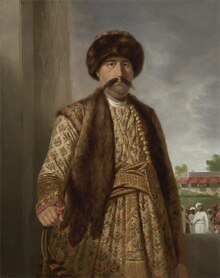
Nawab of Oudh Shuja ud Daulah
|
|
| Reign | 1753–1775 |
| Predecessor | Safdarjung |
| Successor | Asaf-Ud-Daula |
|
Full name
Jalal-ud-din Haider Abul Mansur Khan Shuja-ud-Daulah
|
|
| Born |
19 January 1732 Mansion of Dara Shikoh, Delhi |
| Died |
26 January 1775 Faizabad |
| Buried | Gulab Bari, Faizabad |
| Spouse(s) | Begum Unmatuzzohra Bano "Bahu Begum" |
| Father | Safdarjung |
| Religion | Islam |
| Military career | |
| Allegiance |
 Mughal Empire Mughal Empire
|
| Service/ |
Nawab of Oudh |
| Rank | Subadar, Grand Vizier, Nawab |
| Battles/wars | Mughal-Maratha Wars, Third Battle of Panipat, Battle of Buxar |
Shuja-ud-Daulah (b. 19 January 1732 – d. 26 January 1775) was the Subedar Nawab of Oudh from 5 October 1754 to 26 January 1775,
Though a minor royal, he is best known for his key roles in two definitive battles in Indian history - the Third Battle of Panipat which temporarily halted Maratha domination of the northern regions of the Mughal Empire and overthrew Shah Jahan III and reaffirmed Shah Alam II as the rightful emperor of the Mughal Empire. He had allied himself with Mir Qasim and took part in the Battle of Buxar, which ended in defeat.
Shuja-ud-Daulah was the son of the Mughal Grand Vizier Safdarjung chosen by Ahmad Shah Bahadur. Unlike his father Shuja-ud-Daulah was known from an early age for his abilities to synthesize his subordinates, this skill would eventually cause him to emerge as the chosen Grand Vizier by Shah Alam II.
Shuja-ud-Daulah is also known to have assisted the famous Alivardi Khan on various occasions when the territories of the Nawab of Bengal, were being ravaged by Raghoji I Bhonsle and his Marathas. Thus Shuja-ud-Daulah is known to have been a very respected figure among the servicemen of Alivardi Khan.
...
Wikipedia